Anderson 13 fuel model
Description
The Anderson 13 fuel model, also known as the Albini 13, is a widely recognized system used in wildfire modeling to categorize vegetation types based on their burning characteristics. Developed by Hal Anderson in the 1980s [1], these models classify surface fuels into 13 groups based on parameters such as fuel load, moisture content, and expected fire behavior. Each fuel model provides an idealized description of vegetation structure, from fine grasses and brush to timber and logging slash, enabling prediction of flame length, fire spread rate, and intensity under given environmental conditions.
Firebench dataset content
Variable name in dataset |
Unit |
Standard Variable Name |
type |
Source |
|---|---|---|---|---|
fcwh |
m |
fuel_wind_height |
float64 |
[2] |
fcz0 |
m |
fuel_roughness_height |
float64 |
[2] |
ffw |
- |
fuel_fraction_consumed_flame_zone |
float64 |
[2] |
fgi |
kg m-2 |
fuel_load_dry_total |
float64 |
[1] |
fuel_name |
object |
[1] |
||
fueldens |
lb ft-3 |
fuel_density |
float64 |
[2] |
fueldepthm |
m |
fuel_height |
float64 |
[1] |
fuelmce |
% |
fuel_moisture_extinction |
float64 |
[1] |
ichap |
- |
fuel_chaparral_flag |
int32 |
[2] |
k_tc |
W m-1 K-1 |
fuel_thermal_conductivity |
float64 |
[2] |
savr |
ft-1 |
fuel_surface_area_volume_ratio |
float64 |
[2] |
se |
- |
fuel_mineral_content_effective |
float64 |
[2] |
st |
- |
fuel_mineral_content_total |
float64 |
[2] |
weight |
- |
fuel_sfireburnup_consumption_cst |
float64 |
[2] |
windrf |
- |
fuel_wind_reduction_factor |
float64 |
[3] |
fuel_load_1h |
ton acre-1 |
fuel_load_dry_1h |
float64 |
[1] |
fuel_load_10h |
ton acre-1 |
fuel_load_dry_10h |
float64 |
[1] |
fuel_load_100h |
ton acre-1 |
fuel_load_dry_100h |
float64 |
[1] |
fuel_load_live |
ton acre-1 |
fuel_load_dry_live |
float64 |
[1] |
Usage
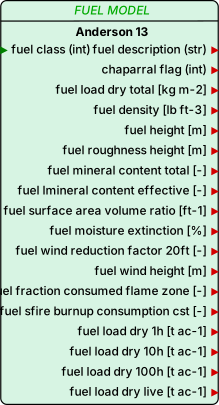
Import the Anderson fuel model data using FireBench with:
import firebench.tools as ft
fuel_data = ft.import_anderson_13_fuel_model()
The data is stored in the dictionnary fuel_data. The keys are the standard variable names and the values are numpy array associated with pint unit.
Compatibility with fire models
Compatibility levels:
Full: The data contained in the fuel model covers all the fuel input needed by the fire model
Partial: The data contained in the fuel model covers some of the fuel input needed by the fire model
None: The data contained in the fuel model covers none of the fuel input needed by the fire model
Fire model |
Category |
Compatibility level |
|---|---|---|
Rothermel_SFIRE |
ROS vegetation |
Full |
Balbi_2022_fixed_SFIRE |
ROS vegetation |
Full |
Hamada_1 |
ROS urban |
None |
Hamada_2 |
ROS urban |
None |
References
[2] WRF-SFIRE version W4.4-S0.1